iOS & macOS Apps - Archive
I’ve worked on many side projects over the years. What follows is a list of side projects that I managed to release (be it as a website or in the app store)
2026: Pixellect

A free, native Photoshop-like image editor for macOS: pixel, text, vector, adjustment and effect layers, masks, layer styles, PSD import and export, and an AI agent that edits directly in your layers instead of producing a flat image.
2026: Emyn
A virtual camera for macOS that composes your desktop windows into your webcam feed, so you can show something during a video call without sharing your screen. You can scale down your own video and control the window right from within Emyn.
2024: Tailored Pod

An AI-generated daily news podcast and newsletter. You pick the topics you care about, vote on articles to improve the selection, and get a short, well-rounded summary every morning.
2024: CrateMate
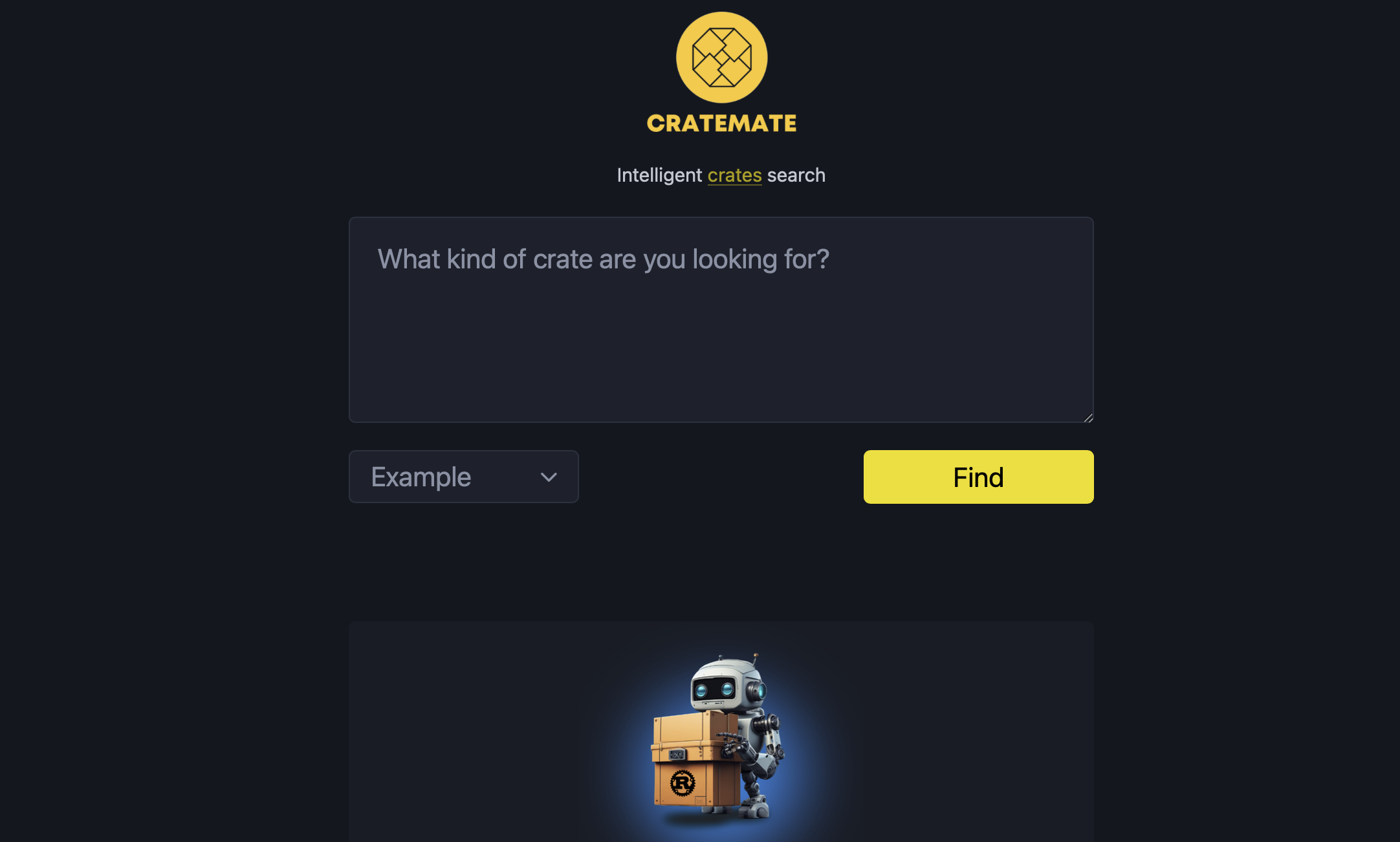
A RAG search over all crates on crates.io. Describe what you want to do in Rust, and CrateMate uses embeddings and an LLM to suggest the best crate for the job.
2023: Subtitlo
A macOS app that integrates with Keynote and PowerPoint and transcribes your talk into live subtitles, so every member of the audience can follow along.
2023: Ebou
A Mastodon client with a messenger feel. It groups new toots by author and displays them like a chat app such as Telegram or iMessage. Written in Rust with Dioxus.
2022: TwitVault
A cross-platform desktop app, written in Rust, that downloads your Twitter data via the API, keeps it in sync, and lets you browse and search it offline.
2021: Postsack
A cross-platform Rust app that imports hundreds of thousands of emails in about a minute and visualizes them as clusters in a treemap, so you can see where all that mail comes from.
2020: Hyperdeck

Markdown-based presentations for macOS and iPad, with themes, animations, transitions and interactive elements. Released in April 2020, and I still make all my slides with it.
2014: Social Collage

Social Collage was an app that allowed taking multiple image sources (Local pictures, Facebook uploads, Instagram Uploads, Flickr uploads) and then arranging them into a collage (a grid of images) with background images, themes, and many options. These collages could then be exported or prints could be ordered right from the app. This app was released but didn’t really perform well.
2013: Lex Lactose
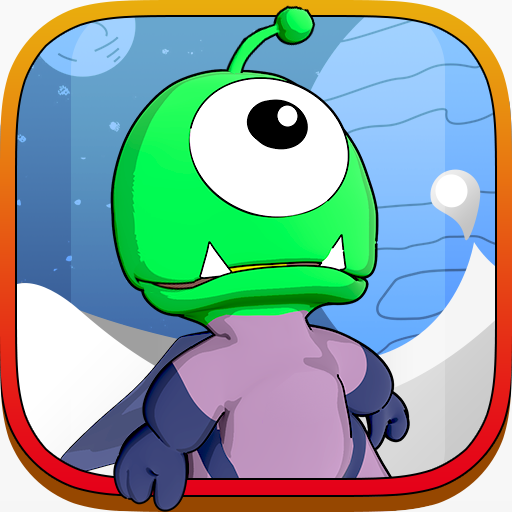
Lex Lactose was a iOS game where you fell down the screen and had to tap to jump up and evade enemies. It was a cute game about a lactose intolerant alien who could jump up via farts. It had a multiplayer server that allowed playing against other players. It was never officialy released (tbh. I don’t know why I never released it).
2015: Hirundo
Hirundo was a macOS Client for the Swift Mailing List. An app that allowed following mailing list discussion without having to set up a complicated email account for it. It was never officialy released.
2012: Appetizer

Appetizer was a client for the App.net social network (that doesn’t exist anymore). It was a lot like Twitter, only paid.
2016: PhotoDesk 5
At this point I was kind of sure that Instagram was going to close the official API so I created a complete rewrite of PhotoDesk that used the unofficial Instagram API. Whereas Insta/PhotoDesk 1-4 was written in Objective-C, this was written all in Swift.
It had many features, including image uploads (due to the private API) and a much better statistics implementation. It also included a full blown photo editor that allowed editing photos right from the app - including cropping, rotating, and applying filters.
This version of PhotoDesk was later on sold to SpicyApps where it is still available.
2014: PhotoDesk 4
The big change in PhotoDesk 4 was called “PhotoDesk Engage” which was a activity dashboard to quickly see how your accounts were performing. To pull this off, the api access keys were shared (in a cryptographically secure manner) with a backend service that would run OpenResty and continously monitor your account to collect statistics & dashboard data while PhotoDesk wasn’t running.
2013: PhotoDesk 3
Instagram had been bought by Facebook, and usage was going through the roof. I had a lot of users, by this point around 300k. This new version improved the performance and the UI and made it a really useful app especially when handling multiple Instagram accounts. This was the reason why suddenly a lot of marketing agencies and influencers began using the app.
2012: InstaDesk 2
Instadesk was becoming quite the success. At this point I made ~2k a month with Instadesk and so I doubled down to create a better version and released version two roughly a year later (after multiple 1.x updates).
At this point, Instagram contacted me with a trademark for everything called “Insta*” and required I change the name of the app. So I did and it become PhotoDesk
2011: InstaDesk 1
I had heard about Instagram in late 2010. In 2011 they opened up their api. Since I had already implemented a whole picture / album client for Clarity / Facebook picture folders, it was easy for me to take this part out of Clarity and build an Instagram client.
2010: Clarity

At this point in time Twitter clients for macOS like Twiterrific or Tweetie were all the rage. I wondered why there was nothing similar but for Facebook, so I created Clarity. This was my first real Objective-C / Cocoa macOS app and it shows. I didn’t understand a lot about the platform and the app was super slow and sluggish because of it.
Clarity had a market however, and sold a good chunk of units. However, back then Facebook was moving at such a pace that it was impossible for me as a single indie developer to implement all the features of the platform. Yet, every user needed a different feature and gave “bad reviews” until their much needed feature was implemented. It was a unwinnable battle and so I gave up.
2010: Wakelight
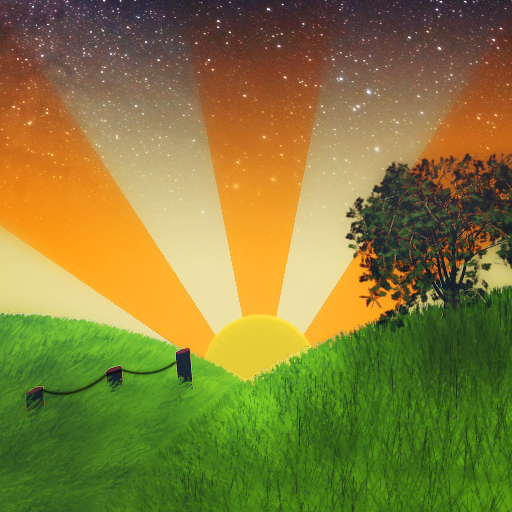
The first successful app I created (and my first iPad app, right after the iPad was released). It started slowly but after a couple of days I had ~100 sales per day. The reason being that there was no “official” alarm clock app for the iPad from Apple.
2010: Wortsalat
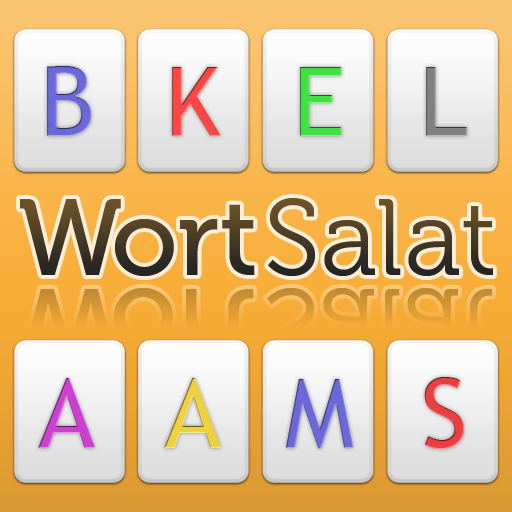
A German word game for iOS. I created this after becoming addicted to a different word game myself.
2009: Oweme
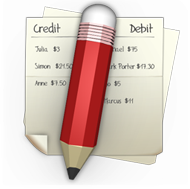
My first real iOS app where I felt like I was solving a need. Its a money lending tracker. You’re out with friends and somebody needs 20 bucks and you lend them the money and you don’t want to forget about it. Oweme makes it simple to quickly write this down.
2009: Happiness
I build a fat app for iOS in 2008. However, then Apple officialy forbade fart apps and I wondered what to do with this almost-ready app, so I rebranded it into “Happiness” an app that plays cute laughs to improve your mood.
2008: TouchDrum
I build this in the week after the release of the official iPhoneOS SDK that allowed building apps for the app store. Its a drum computer to build up beats and play and export them. It was never released to the app store.
2008: Trickets
One app to rule all ticket systems. This was in the pre-Github days and everybody used either trac or bugzilla or something like that to keep track of software tickets / issues. Trickets was a native macOS app to see all tickets in one easy UI like the Twitter app.
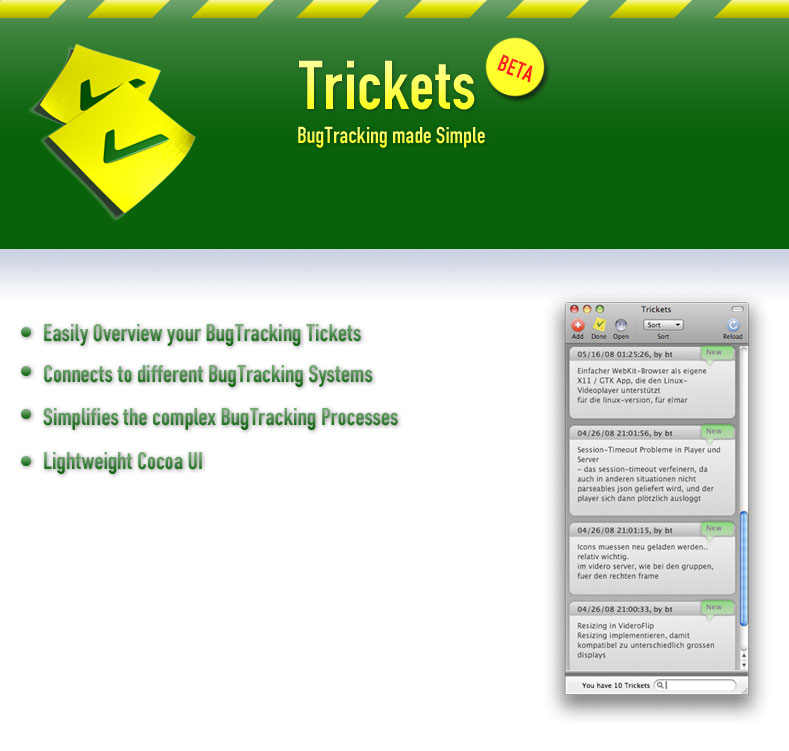
2005: Safarilicious

This my first macOS app in 2005. I didn’t know objc so I build it with Python and PyObjc. It allowed syncing Safari bookmarks to the del.icio.us bookmarking service.